

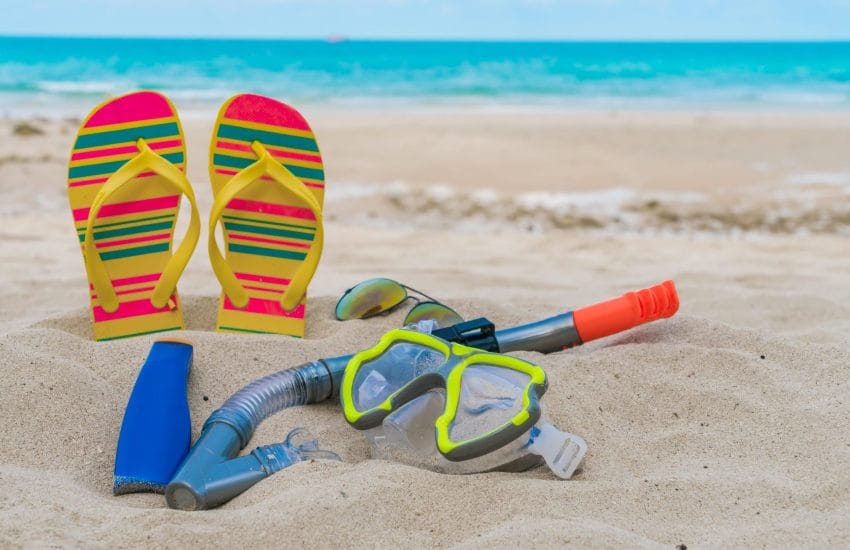
Drift snorkeling in West Palm Beach looks easy from the surface: you float, the tide does the work, and your camera roll fills up with reef selfies. In practice, a few avoidable mistakes can turn “gentle glide” into “why are my calves on fire?” Consider this your friendly, straight-talking guide to the most common first-timer errors—plus simple, proven fixes from captains who run these waters daily.
TL;DR (but read the rest!)
- Hit high slack. Be in the water 20–30 minutes before posted high tide; plan for a 60–90 minute window.
- Start up-current. Don’t drift past your exit.
- Stay in the zone. Swim areas are your friend; boat channels are not.
- Go minimal. Mask, fins, rashguard, float/flag—leave the kitchen sink at home.
- Signals > guesswork. Agree on start, stop, and “I’m okay.”
Mistake 1: Arriving at the tide time (and missing slack)
What happens: You park, suit up, chat, and by the time you hit the water, the magic lull is fading. Visibility drops and the current starts tugging.
Fix: Treat posted high tide like your in-water time, not your parking time. Aim to be floating 20–30 minutes before the listed High, then enjoy the clearest 60–90 minutes centered on slack—if you want a quick primer on why this works, skim this concise NOAA tide explainer right in the middle of your planning. Screenshot the chart and set a reminder.
Captain’s note: If you have two Highs to choose from, pick the one with lighter winds even if it’s slightly lower. Wind often decides visibility more than height.
Mistake 2: Starting down-current and overshooting your exit
What happens: You launch at the wrong spot and drift beyond your planned exit, cue the awkward swim back.
Fix: Identify a start point up-current of your chosen exit and a bail-out halfway through. For shore entries, walk ten extra minutes now to save forty later—if you’re route‑curious, our mapped Phil Foster Park snorkel trail shows how we stage a clean, up‑current start. For boat-assisted drifts, your captain will drop you right where the window is best and pick you up at the pre-set endpoint; it mirrors our bread‑and‑butter snorkeling trip format that times the slack precisely.
Quick route template: Structure → inside the swim zone → parallel to a clear shoreline exit. Easy, safe, repeatable.
Mistake 3: Kicking up the bottom (and ruining everyone’s photos)
What happens: Big scissor kicks churn up sand and silt. The water clouds, fish scatter, and your buddy’s camera catches a snowstorm.
Fix: Switch to compact frog kicks and keep your fins higher than your hips. Stay a couple of feet above the bottom. If you do cloud it, pause for 30–60 seconds—sediment settles surprisingly fast around slack.
Pro tip: Swim slightly higher and shoot slightly upward for blue backgrounds and cleaner frames.
Mistake 4: Over-packing (and becoming a floating garage)
What happens: Dry boxes, giant fins, spare masks, three cameras, and a small grocery section dangle off every D-ring. You fight drag all day.
Fix: Bring only what you’ll use: mask/snorkel, comfortable fins, rashguard, compact float/flag, and a small dry bag for keys/phone. That’s it. Stash snacks and extras topside or on the boat.
Bonus: Apply reef-safe sunscreen 30 minutes before water entry so it actually binds.
Mistake 5: Ignoring wind, rain, and boat traffic
What happens: The tide looks good on paper, but a stiff onshore wind and yesterday’s rain sabotage visibility. Boat wakes stir up the shallows.
Fix: Pair the tide chart with a quick wind + radar check. Sub-15-knot winds and 24 hours without heavy rain are your best friends. If it’s breezy, shorten the route and tuck into lee sides of structure—browse our nearby destinations guide as you pick sheltered coves and entries. Avoid high-traffic edges during peak boating hours.
Rule of thumb: A modest tide with calm winds usually beats a big tide with strong onshore wind.
Mistake 6: Swimming across boat channels
What happens: You try to shortcut on the surface and meet wakes, noise, and stress.
Fix: Don’t. Stay inside marked swim zones. If a route requires crossing a channel, it’s the wrong route for a first timer. Use designated entries/exits and keep your float/flag visible; first‑timers love the gentle coves around Peanut Island for easy, channel‑free practice.
Remember: Channels are for boats; your path is within the lines.
Mistake 7: Mask leaks, fog, and the never-ending fiddle
What happens: Water creeps in every minute, lenses fog, patience evaporates.
Fix: Do a mask fit test on land—gentle inhale through the nose; the mask should stick without the strap. Strap goes high on the crown, not around the ears. Rinse, apply defog, and avoid rubbing sandy fingers inside the lens. A tiny bit of water? Look up, press top frame, exhale through the nose.
Pro move: Tighten one notch at a time. Over-tightening causes more leaks.
Mistake 8: Losing the group
What happens: Currents shift, someone stops for photos, the rest keep drifting. Cue the “where’d they go?” routine.
Fix: Agree on spacing (one to two body lengths), a turnaround time, and three simple signals before you enter:
- Palm-flat circle = “OK.”
- Thumbs-up = “End/ascend.”
- Two fingers to eyes then point = “Look here.”
Set a meet-up point on shore or with your captain in case of separation.
Mistake 9: Chasing wildlife (and scaring it away)
What happens: You rush the turtle/seahorse/ray, sand erupts, and the star of the show disappears.
Fix: Hover, don’t herd. Approach slowly from the side, keep distance, and let animals choose the interaction. You’ll see more—and your photos will look better—when you move like a guest, not a goalie.
Conservation basics: No touching or handling, ever; keep wildlife encounters respectful by reviewing our wildlife respect guidelines midway through your prep. Give manatees generous space. Pack out what you pack in.
Mistake 10: Skipping the practice lap
What happens: The first 15 minutes become equipment troubleshooting time—right when the water is clearest.
Fix: Take a two-minute practice in knee-to-waist-deep water before the main drift: mask clear, snorkel purge, fin check, and signals. Iron out the kinks while you can still stand.
Bonus mistakes (and quick fixes)
- Starting hungry or dehydrated: Snack and hydrate before you splash. Even light current adds effort.
- Bare skin all day: Wear a rashguard to cut sting risk and sunburn without fuss.
- Zero bailout plan: Identify exits every 10–15 minutes along your route.
- No float/flag: In designated areas, it’s required—and it makes you easier to see.
Build a simple first-timer plan
1) Check conditions. Find today’s high tide near Lake Worth Inlet and pair it with a quick wind/radar scan—if timing’s tight, secure your slot via book a charter so we stage the window for you.
2) Back-plan. Aim to be floating 20–30 minutes pre-High and set a 60–90 minute window.
3) Set your route. Start up-current, identify a midpoint bailout, and stay within swim zones; for a fun breather between drifts, pencil in the Jupiter Sandbar right in the middle of your plan.
4) Pack smart. Mask, fins, rashguard, float/flag, small dry bag, water, light snack.
5) Agree on signals. “OK,” “End,” and “Look here.” Keep spacing tight and friendly.
6) Practice two minutes. Troubleshoot before the best water, not during it.
7) Drift and smile. Slow kicks, minimal sand, no channels, lots of photos.
Family and first-timer extras
- Cap the first session at 45 minutes even if slack allows more.
- Put confident swimmers at the front and back.
- Choose entries with gentle slopes, shade for breaks, and clear sightlines.
- Teach kids to keep fins below the surface to avoid splash and fatigue.
What to bring (short list that actually works)
- Mask and snorkel that fit
- Comfortable fins (soft to medium blades)
- Rashguard or light top
- Compact float/flag where required
- Small dry bag (phone/keys) + microfiber towel
- Reef-safe sunscreen (apply early), water, light snack
Optional: a simple fish ID card for post-drift bragging rights.
Why go with Coastal Marine Charters for your first drift
We do the tide math, staging, safety brief, and pickups so you get the fun part: a relaxed, confidence-building first drift.
Coastal Marine Charters
809 Hummingbird Way, North Palm Beach, FL 33408, United States
Phone: (561) 401-8856
Website: https://coastalmarinecharters.com/
Want a captain to time slack, manage the route, and keep the group together? We’ll set you up for a first drift that feels easy from splash to smile.
&media=https://coastalmarinecharters.com/wp-content/uploads/2025/10/snorkeling-mistakes-min.jpg)